
When investors evaluate a real estate project, they often focus on land price and construction costs. However, one of the most underestimated aspects of any project is infrastructure. Understanding infrastructure costs real estate development projects require is essential to avoid budget overruns and poor investment decisions.
In many cases, a piece of land may appear affordable at first, but the hidden infrastructure requirements can significantly increase the total cost of development. Roads, drainage systems, electricity, water supply, and site preparation all play a major role in determining the true financial viability of a project.
For developers, investors, and property buyers in the Dominican Republic, understanding infrastructure costs real estate development projects involve is critical for long-term success.
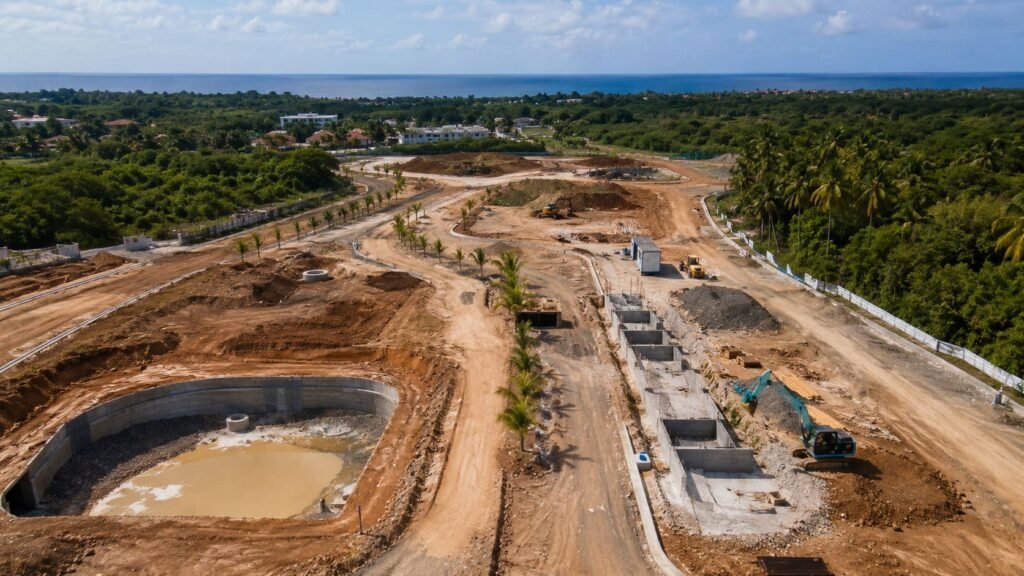
Why Infrastructure Matters in Real Estate Development
Infrastructure is the foundation that allows a project to function properly. Without access roads, utilities, drainage, and technical preparation, even a well-designed development can face delays and operational problems.
One of the main reasons why infrastructure costs real estate development projects are often underestimated is that many investors focus only on visible construction expenses. However, preparing a site for development usually requires substantial work before vertical construction even begins.
Infrastructure also directly impacts:
- Property value
- Construction efficiency
- Long-term maintenance
- Marketability
- Investment returns
Projects with poor infrastructure planning frequently experience delays, higher maintenance costs, and reduced buyer confidence.
Road Access and Site Connectivity
Road access is one of the first infrastructure considerations in any development.
In tropical and coastal areas such as Las Terrenas, some lots may require:
- Road expansion
- Retaining walls
- Drainage systems
- Excavation work
- Stabilization for sloped terrain
These expenses can dramatically affect infrastructure costs real estate development projects must account for.
Good road access is not only important during construction. It also affects long-term usability, emergency access, and overall property value.
Developers who underestimate connectivity costs may face expensive modifications later in the project.
Utilities and Service Connections
Utilities are another major component of infrastructure costs real estate development projects require.
Developers must evaluate access to:
- Electricity
- Water supply
- Internet and telecommunications
- Sewage or septic systems
- Stormwater drainage
In some locations, utility connections already exist nearby. In others, developers may need to extend infrastructure over long distances.
This can increase costs significantly, especially in undeveloped or hillside areas.
Water management is especially important in tropical climates. Poor drainage planning can create flooding, erosion, and long-term maintenance problems.
For this reason, infrastructure planning should begin during the earliest stages of site analysis.
Land Preparation Costs
Preparing the land is another critical factor in infrastructure costs real estate development planning.
Depending on the condition of the site, developers may need:
- Clearing and grading
- Soil stabilization
- Excavation
- Retaining structures
- Drainage channels
- Foundation preparation
Sloped or irregular terrain can increase costs substantially. While these locations often offer attractive views and premium market value, they may also require more complex engineering solutions.
Ignoring land preparation costs is one of the most common mistakes in real estate development.
Drainage and Water Management
Drainage systems are essential in tropical environments. Heavy rainfall and seasonal storms can create serious problems if water is not managed correctly.
This makes drainage one of the most important aspects of infrastructure costs real estate development projects in the Dominican Republic.
Proper drainage planning may include:
- Surface drainage systems
- Retention areas
- Underground piping
- Slope control
- Water redirection systems
Without adequate drainage infrastructure, projects may suffer from flooding, soil erosion, and structural damage.
Investing in proper water management during the early stages of development reduces long-term operational risk.
Infrastructure and Investment Value
Infrastructure quality directly affects property value.
Projects with reliable access, utilities, and drainage systems are generally more attractive to buyers and investors. They also tend to perform better in terms of long-term appreciation and rental demand.
Understanding infrastructure costs real estate development projects require allows investors to evaluate whether a property truly offers good value.
A cheaper piece of land may ultimately become more expensive if infrastructure requirements are high. On the other hand, a more expensive property with existing infrastructure may reduce development risk and accelerate project timelines.
This is why infrastructure analysis should be part of every real estate feasibility study.
Common Mistakes Developers Make
Several mistakes frequently increase infrastructure costs real estate development projects face.
Common issues include:
- Underestimating site preparation
- Ignoring drainage requirements
- Failing to verify utility access
- Choosing land based only on price
- Delaying infrastructure planning until construction begins
These mistakes can create delays, redesigns, and unexpected expenses.
Successful developers understand that infrastructure is not an optional detail. It is one of the core components of project viability.
How to Reduce Infrastructure Costs
Reducing infrastructure costs real estate development projects require begins with proper planning.
Developers should:
- Conduct technical site evaluations
- Analyze topography before purchasing land
- Verify utility availability
- Work with experienced engineers and architects
- Include contingency budgets
- Evaluate long-term maintenance implications
Professional planning allows developers to identify potential problems early and optimize the project design accordingly.
In many cases, smart design decisions can significantly reduce infrastructure complexity and improve overall project performance.
Final Thoughts
Infrastructure is one of the most important — and most underestimated — aspects of development planning. Understanding infrastructure costs real estate development projects require helps investors make more informed decisions and avoid unexpected financial pressure.
Road access, utilities, drainage, and land preparation all influence the success of a project. Evaluating these elements early can improve profitability, reduce delays, and strengthen long-term investment performance.
If you are exploring development opportunities in Las Terrenas or the Dominican Republic, you can learn more about architecture, construction, and active real estate projects by visiting the All Project Group main website, where you can explore ongoing developments and discover how their team approaches integrated real estate development.