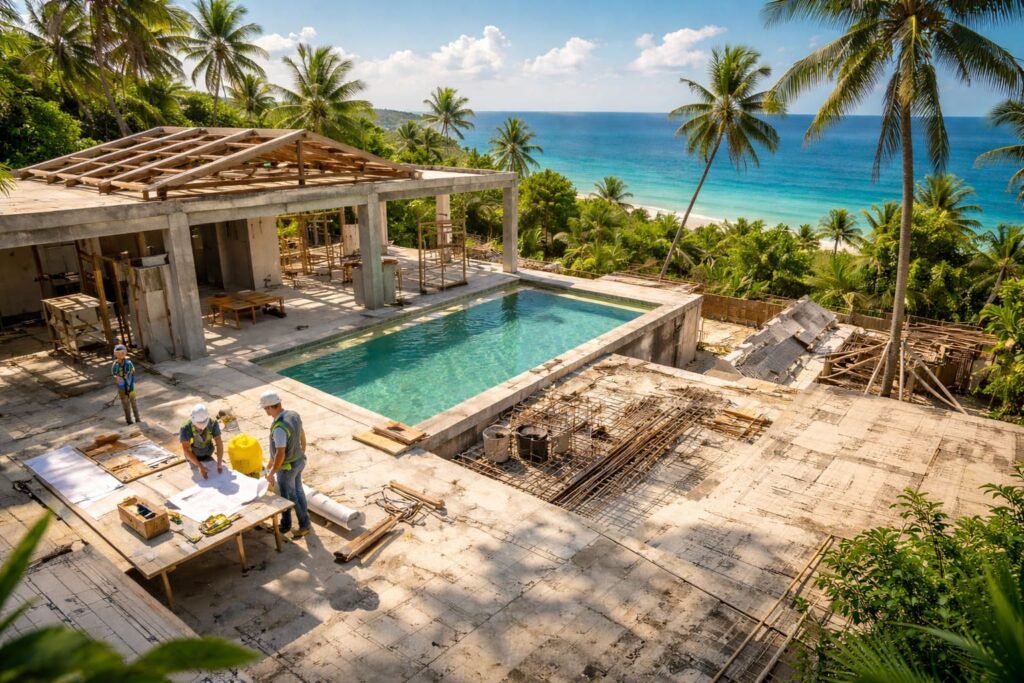

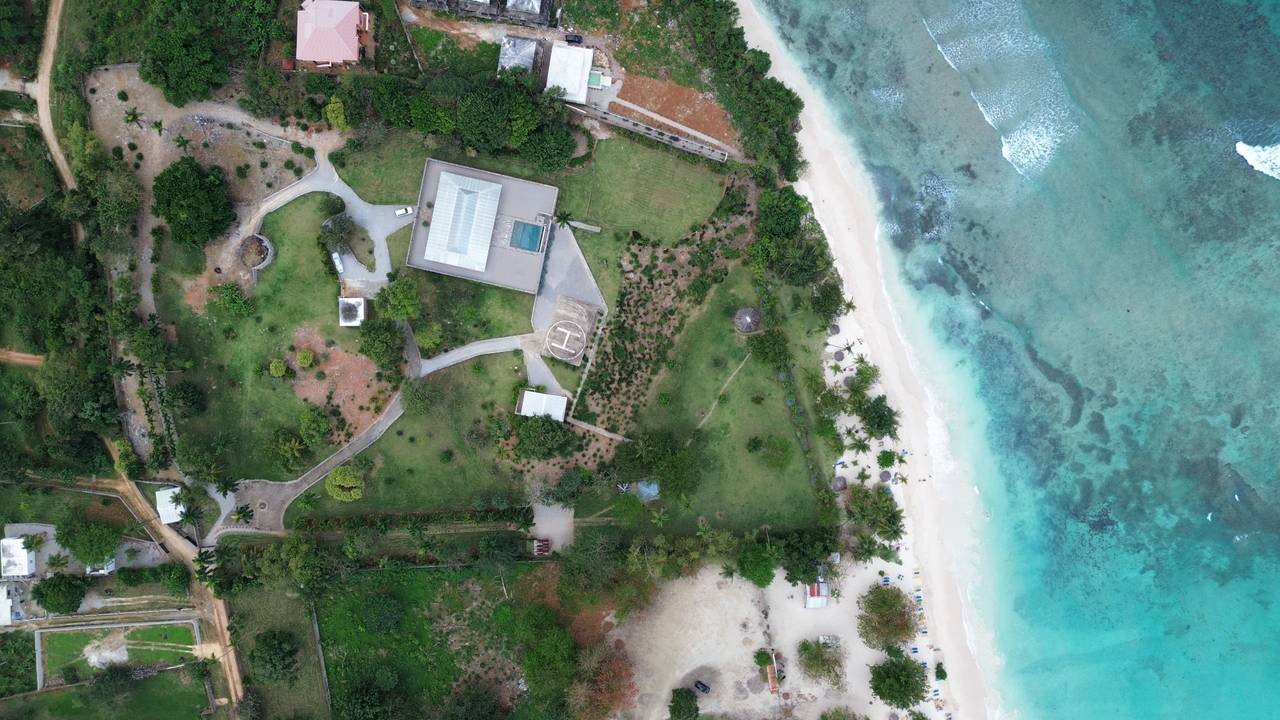
The real estate boom has prompted many investors to seek land for construction in the Dominican Republic, especially in tourist destinations such as Las Terrenas, Samaná, Punta Cana, and Cabarete. However, even if a piece of land may seem attractive at first glance, that does not mean it is suitable for construction.
Making the right choice is crucial: not only to ensure the structural safety of the project, but also to avoid cost overruns, legal complications, and environmental risks. In this guide, you will find everything you need to know before buying land in the Dominican Republic, from soil types to essential technical studies.
Why evaluate a plot of land before buying it
The purchase of land for construction in the Dominican Republic should not be based solely on location, views, or price. A preliminary analysis prevents costly mistakes and ensures that the project can be developed without unforeseen events.
Essential aspects to evaluate:
- Access and roads: safe roads, drainage, connectivity.
- Basic services: water, electricity, telecommunications.
- Slope of the land: affects foundations, stability, and drainage.
- Soil bearing capacity: determines the type of structure that can be built.
- Environmental risks: flood zones, erosion, geological faults.
A piece of land can be very expensive if it is not suitable for building.
Types of land in the Dominican Republic
The country has a huge variety of soils and topographies. Understanding them is essential for proper planning.
Coastal land
Advantages: unique views, high tourist value, and ideal for premium projects.
Disadvantages: high salinity, humidity, erosion, and corrosion of materials.
Recommendation: use galvanized steel, good drainage, and elevated structures.
Land on hills or slopes
Very common in areas such as Las Terrenas.
Advantages: panoramic views and privacy.
Disadvantages: steep slopes, risk of landslides, and need for retaining walls.
Requires: geotechnical studies and specialized structural designs.
Clayey or wet soils
Common in tropical areas with high rainfall.
Problems: unstable soils, expansion and contraction, subsidence.
Solution: deep foundations or piles, compacted fill.
Rocky terrain
Advantages: high stability.
Disadvantages: costly and slow excavation.
Recommendation: plan for heavy machinery and additional costs.
Soil studies: the step that should never be skipped
Before starting any project on land for construction in the Dominican Republic, it is mandatory to conduct a geotechnical study.
This analysis defines:
- soil resistance
- load capacity
- water table
- landslide risks
- type of foundation required
The results may completely change the design or even determine that the land is not viable for the desired construction.
A professional study prevents millions in losses and ensures structural stability.
Risks of building without technical analysis
Many investors make the mistake of buying without verifying the actual condition of the land. This can lead to:
- Structural cracks
- Chronic leaks
- Drainage failures
- Landslides
- Settling of foundations
- Need for costly reconstruction
In addition, municipalities and regulatory agencies may deny building permits, causing delays or loss of investment.
In the Dominican Republic, building without proper studies is not only risky—it can also be illegal.
Building in tropical and humid climates: additional challenges
The characteristics of the Dominican climate require tailored solutions:
High humidity
It affects wood, steel, concrete, and finishes. Recommendations:
- cross ventilation
- waterproof sealants and coatings
- selection of anti-corrosive materials
Air salinity (in coastal areas)
Steel corrodes faster.
Solutions:
- stainless steel or galvanized steel
- anti-corrosive paints
- avoid low-quality fixings
Heavy rains
They can saturate the soil and cause erosion.
Measures:
- deep storm drains
- retaining walls
- raising the foundation level
These considerations are key when it comes to land for construction in the Dominican Republic.
What should a reputable construction company in the Dominican Republic offer?
A professional company must accompany all phases of the project:
- Preliminary assessment of the terrain
- Coordination of geotechnical studies
- Architectural design adapted to the tropical climate
- Structural design according to country regulations
- Building permit management
- Continuous supervision of construction work
Working with experts reduces risks, optimizes costs, and ensures that the investment is secure.
Guide to choosing wisely and building safely
Investing in land for construction in the Dominican Republic is a great opportunity, but only if it is done with technical analysis and professional guidance.
Suitable land is the foundation of a successful project; unsuitable land can become a constant source of problems.
If you are considering buying or building in Las Terrenas or anywhere else in the country, it is essential to consult with specialists.
Ready to develop your project in the Dominican Republic?
At All Project Group SRL, we accompany you from the evaluation of the land to the completion of construction, including studies, architecture, and permits.
Discover how we can help you:
https://allprojectgroup.com/construction-company-in-las-terrenas/