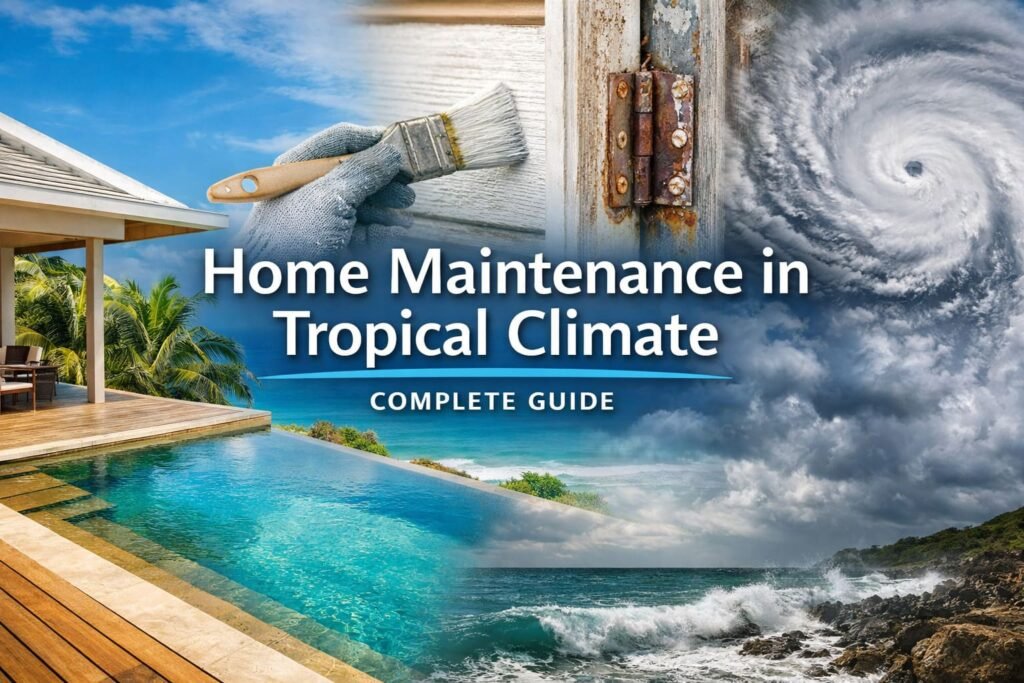

The durability of buildings in tropical climates is one of the main concerns of those who build or invest in regions such as the Dominican Republic. Constant humidity, heavy rains, high temperatures and saline environments make buildings subject to much more demanding conditions than in temperate climates.
However, climate alone does not determine how long a building lasts. The real difference is in how a home is designed, how it is built and how it is maintained. Understanding these factors is key to achieving durable and functional projects over time.
What does durability of a construction really mean?
When we talk about durability of buildings in tropical climates, we refer to the time during which a building can perform its function safely, comfortably and efficiently, without serious structural failures or premature deterioration.
It is important to distinguish between:
- Structural durability, related to foundations, columns, beams and slabs.
- Durability of finishes, such as coatings, paints and carpentry.
- Durability of installations, including electrical, sanitary and plumbing systems.
Not all components age at the same rate, but they all influence the perception and value of the home.
Tropical climate factors affecting durability
The durability of buildings in tropical climates is directly conditioned by the environment:
- High humidity, which favors the appearance of mold, fungi and corrosion.
- Intense rainfall, requiring efficient drainage systems.
- Saline environments, especially in coastal areas, which accelerate the oxidation of metals.
- Constant solar radiation, which degrades paints, seals and coatings.
These factors cannot be eliminated, but they can be properly managed from design and construction.
Common mistakes that reduce the durability of homes
One of the main reasons why the durability of buildings in tropical climates decreases is not the climate, but the wrong decisions:
- Use of materials designed for dry climates.
- Lack of adequate natural ventilation.
- Absence of perimeter and storm drains.
- Deficient or non-existent waterproofing.
- Construction without professional technical supervision.
These errors often lead to visible problems within a few years, even in relatively new homes.
The role of architectural design in durability
Good architectural design is one of the most effective tools to improve the durability of buildings in tropical climates without significantly increasing the budget.
Key aspects of the design include:
- Adequate orientation of the house with respect to the sun and winds.
- Cross ventilation to reduce interior humidity.
- Eaves and roofs that protect walls and windows.
- Correct slopes in roofs to evacuate water.
When the design responds to the climate, the building ages better.
Materials suitable for tropical climates
The selection of materials directly influences the durability of buildings in tropical climates. It is not a matter of using “more expensive” materials, but the most suitable ones:
- Well-dosed and properly cured concrete.
- Corrosion-protected steels.
- Treated woods or moisture resistant synthetic alternatives.
- Exterior coatings with high resistance to water and sun.
- Well executed waterproofing systems.
The right combination of materials reduces long-term maintenance costs.
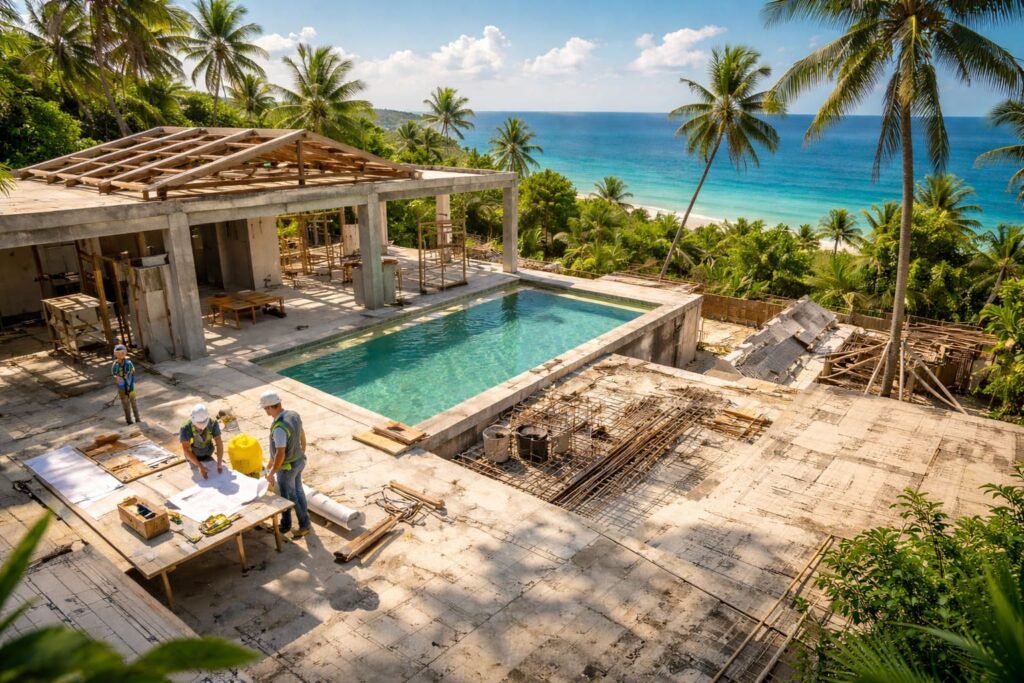
The execution of the work: where durability is defined
Good planning can be lost if the execution is poor. The durability of constructions in tropical climates depends to a great extent on how the work is carried out:
- Adequate soil preparation.
- Correct compaction and drainage.
- Well executed construction details.
- Constant quality control.
- Technical supervision throughout the process.
Many failures do not originate from design, but from poor execution.
Maintenance: the factor that extends service life
Even the best construction requires maintenance. The durability of buildings in tropical climates is increased when preventive maintenance routines are applied:
- Periodic cleaning of drains and gutters.
- Revision of waterproofing.
- Indoor humidity control.
- Early repair of cracks or leaks.
Timely maintenance avoids major and costly repairs.
How long can a well-built building last in a tropical climate?
There is a myth that in the tropics, buildings last less time. In reality, a well-designed, well-built and well-maintained house can have a durability similar to that of temperate climates.
The difference is between:
- improvised constructions without technical control
- professional projects adapted to the climate
Durability is not a question of location, but of construction criteria.
The importance of working with local professionals
The durability of constructions in tropical climates is significantly improved when working with teams that are familiar with the local environment, climate and regulations.
A comprehensive approach that combines architecture, construction and supervision allows:
- anticipate problems
- choosing the right solutions
- optimize costs
- ensuring long-term results
In addition to technical expertise, working with local professionals allows us to correctly evaluate the real conditions of each project from the beginning. In tropical climates, factors such as humidity, salinity, intense rainfall and soil type should be considered before designing and building, not when problems already appear.
At All Project Group SRL we integrate architecture, construction and technical supervision to develop projects adapted to the tropical environment of the Dominican Republic, with a focus on durability, efficiency and long-term value.
👉 If you are planning a construction or investment, you can contact us here.
Conclusion
Building durability in tropical climates is not an impossible challenge, but an opportunity to build better. When design, materials, execution and maintenance are aligned with the environment, buildings can be safe, functional and durable for decades.
Investing in a well thought out construction from the beginning is the best decision to protect the value of a property over time.