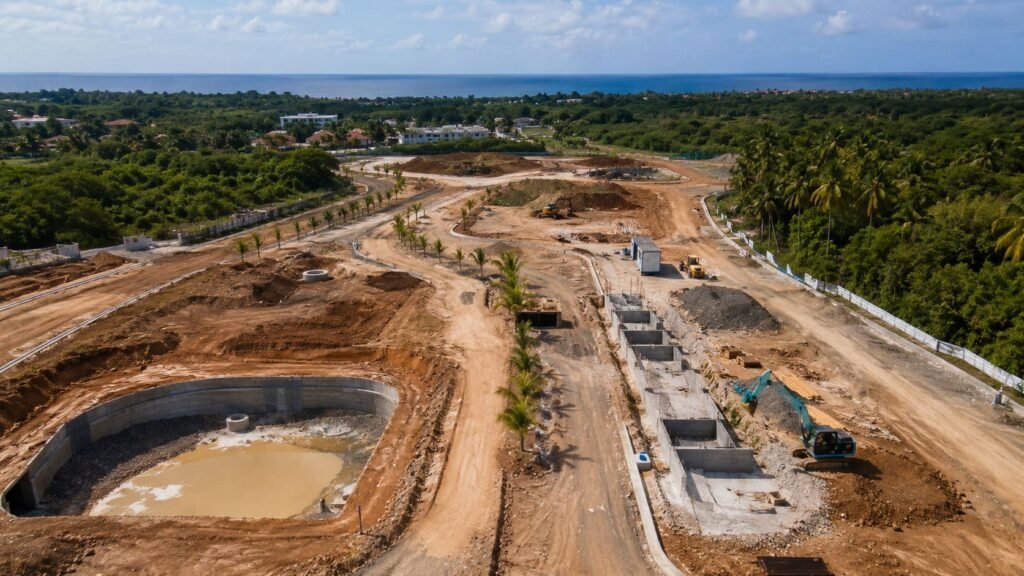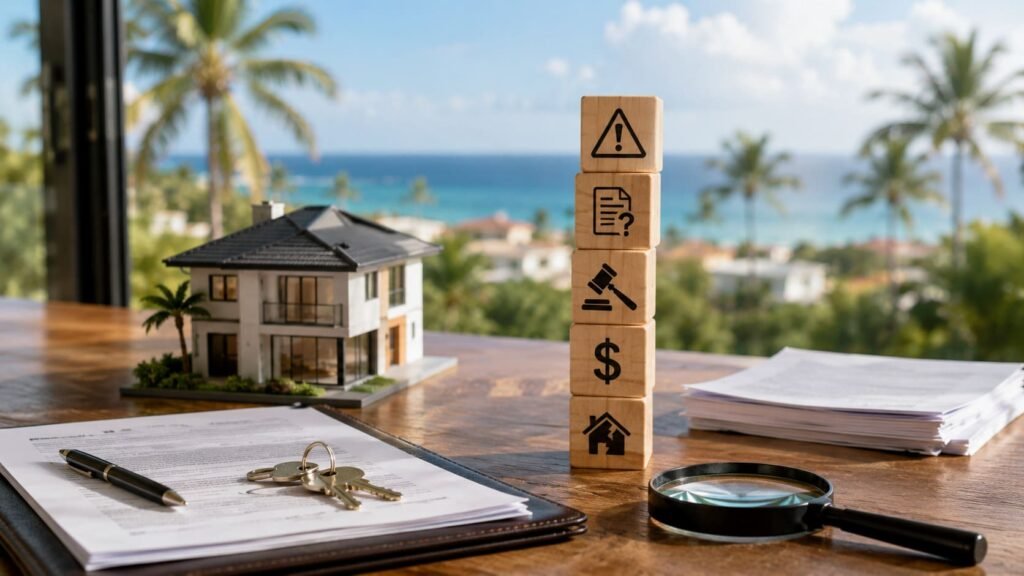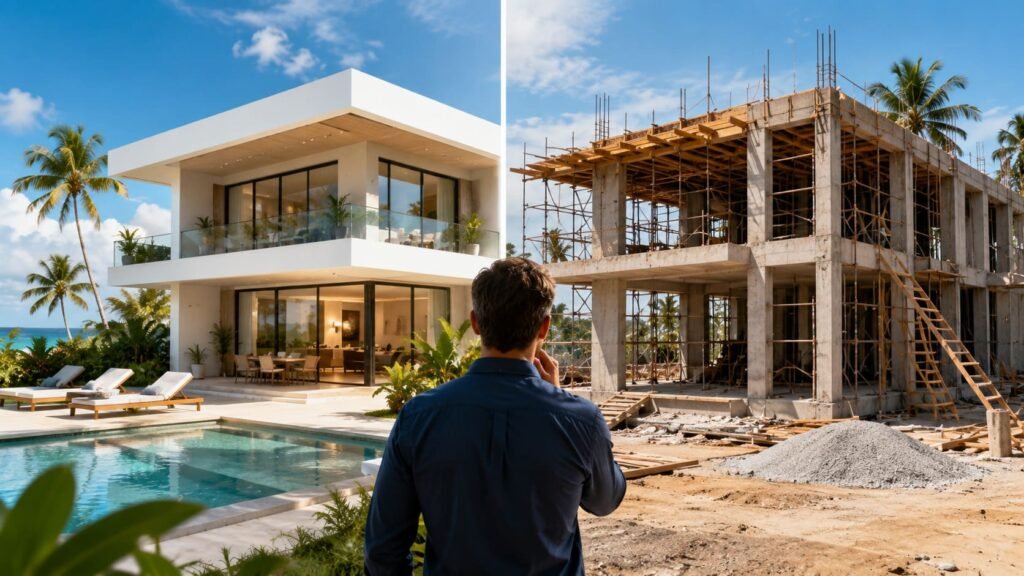

Land filling for construction is one of the most important processes before building a house, villa, or real estate project. Many structural failures begin with the ground, not the walls, and this is mainly due to poorly executed land filling for construction, without proper technique or professional supervision. In the Dominican Republic, where soils can be clayey, wet, coastal, or sloped, site preparation is key to the durability of any construction project.
This article explains in a simple and comprehensive way how to fill land for construction, what materials are used, common mistakes, and how to avoid risks that can cost thousands of dollars in repairs.
What is land filling and compaction?
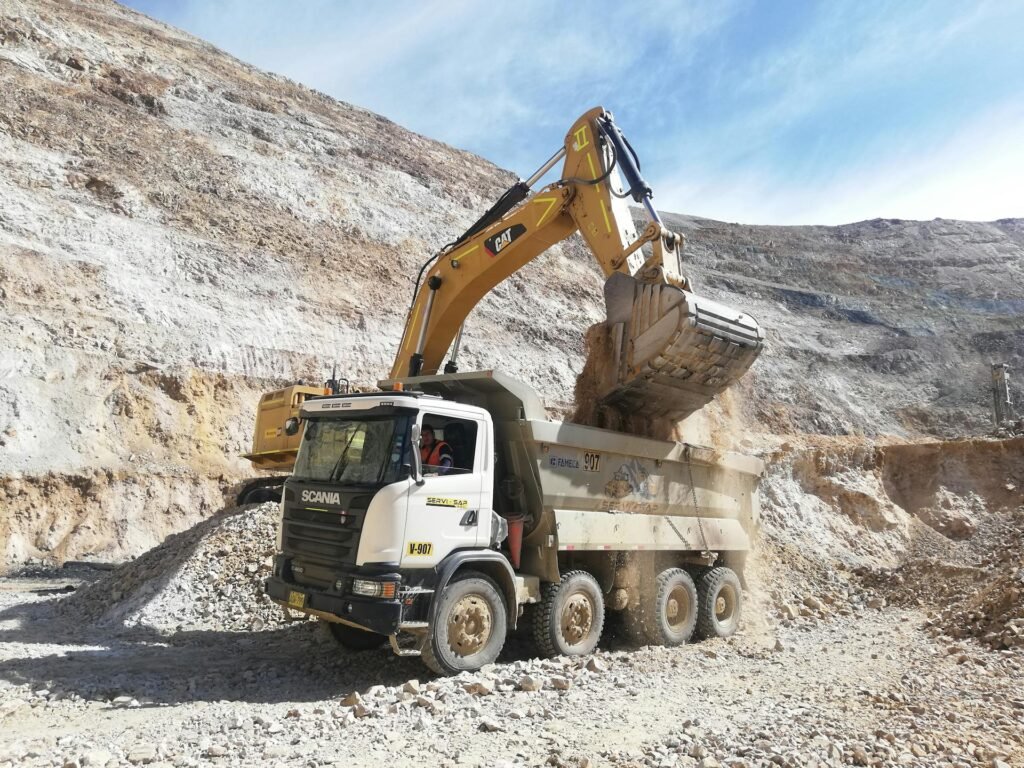
Land filling for construction involves adding suitable material—such as crushed stone, gravel, or caliche—to level, raise, or stabilize land before building. However, it is not just a matter of placing soil: it must be compacted in layers to ensure strength and prevent subsidence.
Compaction is the process of densifying fill material for construction sites using specialized machinery. If a site is not properly compacted, the structure may settle unevenly, crack, or tilt over time.
Why is land filling for construction so important?
In tropical areas such as the Dominican Republic, land filling for construction is particularly crucial due to:
- heavy rains that saturate soft soils
- constant humidity that weakens surface layers
- sloping land that requires additional stability
- poor-quality old fillings in urban areas
- buildings near the sea with loose soil
Poorly executed land filling for construction can cause:
- cracks in walls
- hundimiento de losas
- column inclination
- buried pipe breaks
- chronic leaks
- property depreciation
Una buena estructura sólo es posible si el suelo está correctamente preparado.
Types of soil and materials suitable for backfill
Filling land for construction requires knowledge of the existing soil type:
Common soils in the Dominican Republic
- Clayey: they expand and contract with moisture.
- Sandy soils: drain well but require firm compaction.
- Rocky: stable but difficult to excavate.
- Old landfills: highly unstable if they contain trash or organic matter.
Materials used in the filling
- Gravel and crushed stone: ideal for their stability.
- Caliche compactado: muy común en el país.
- Sand mixed with stones: works well in dry areas.
Topsoil is not suitable for filling land for construction because it contains roots, moisture, and organic material that decomposes.
How is land filling for construction done correctly?
The standard technical process includes several steps:
- Removal of topsoil
No land filling for construction purposes may be carried out on organic soil. - Layering the material
Each layer should be 20–30 cm thick, never 1 meter or more. - Controlled moistening
Helps achieve ideal density before compaction. - Mechanical compaction
Using rollers, vibratory plates, or tampers. - Density tests
In technical land filling for construction, Proctor tests are performed to verify compaction. - Final level verification
Proper supervision prevents unevenness or soft spots.
An improvised fill may appear “even,” but it is not stable if it has not been compacted layer by layer.
Critical situations in the Dominican Republic where filling must be done with greater care
Land filling for construction is even more important in:
Land on hills
Very common in Las Terrenas, Samaná.
Problem: risk of landslides.
Solution: retaining walls + supervised compaction.
Coastal land
Problem: soft, saturated soils.
Solution: use coarse gravel and deep compaction.
Land near rivers or streams
Problem: extreme humidity and clay soils.
Solution: mandatory geotechnical study.
Urban lots filled in decades ago
Problem: fill mixed with trash or debris.
Solution: remove unstable material before refilling land for construction.
Common mistakes to avoid
These errors are responsible for most failures:
- Fill with trash or topsoil.
- Compact only the surface, not in layers.
- Not conducting a soil study before determining the fill for construction sites.
- Build immediately without allowing the fill to settle.
- Using inappropriate machinery.
A project may look good on the outside, but if the land filling for construction is poorly done, the structure is at risk.
Checklist for buyers and investors
Before buying or building, ask:
- Does the land have previous fill?
- Who filled the land for construction?
- Were compaction tests performed?
- Is there a geotechnical study?
- What material was used exactly?
- Was there professional supervision?
If there is no documentation, proceed with caution.
Conclusion: building well starts from the ground up
Land filling for construction is the foundation of a safe, stable, and durable project. No matter how beautiful the house is, if the land is poorly prepared, problems will eventually arise.
In tropical and coastal areas such as Las Terrenas, investing in professional land filling for construction is the best decision to ensure the longevity of a villa or project.
All Project Group SRL: experts in land preparation and construction
At All Project Group SRL, we carry out soil studies, technical supervision and land filling for construction, following professional criteria to ensure stability and durability.
Services:
- Construction of villas in Las Terrenas
- Land surveys and preparation
- Architecture and design
- Building permits
- Development of complete projects
Learn more: https://allprojectgroup.com/construction-company-in-las-terrenas/